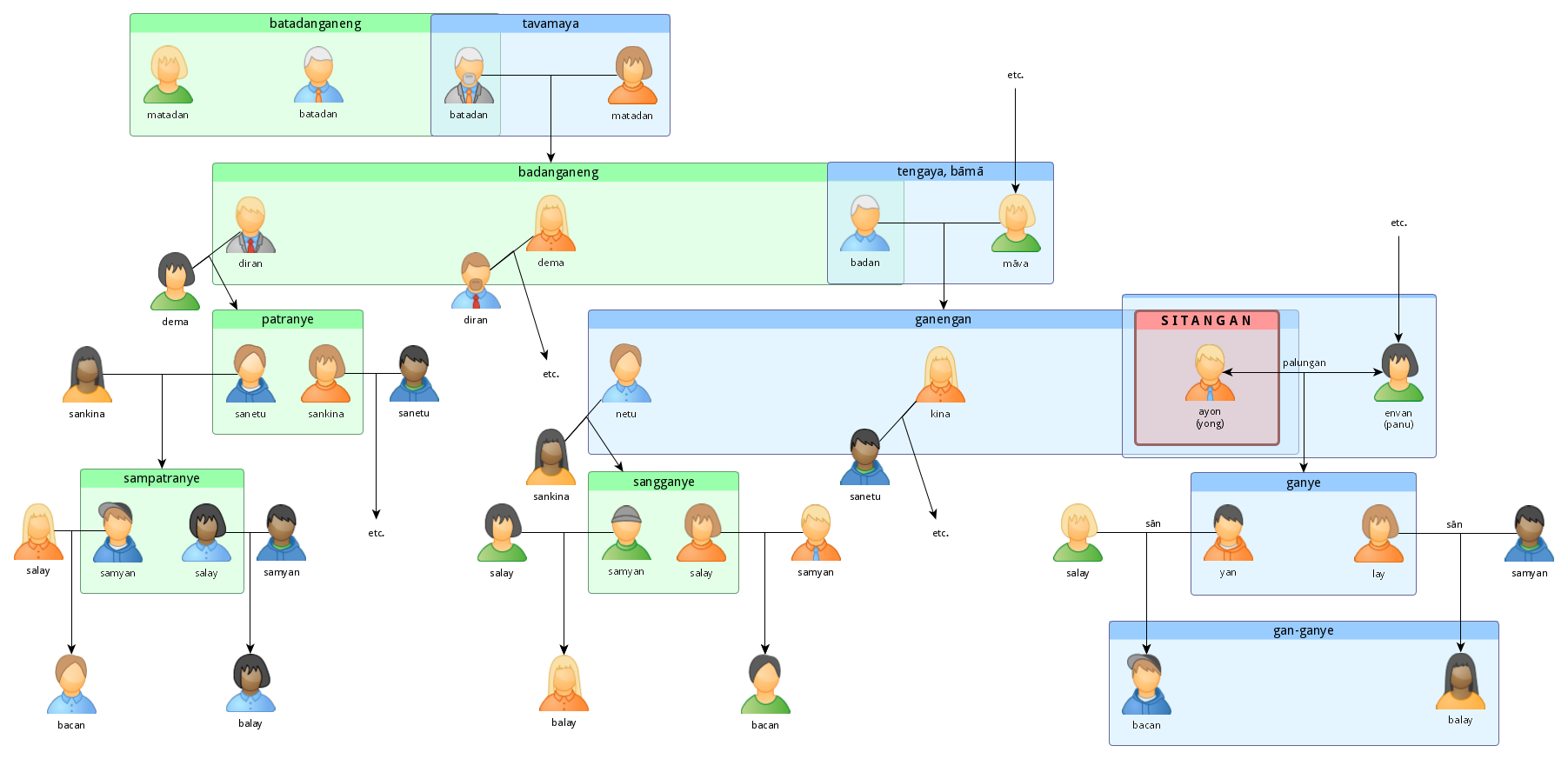
 Kinship terms in Ayeri (click to enlarge)
Close Family (pandaha nasay)
| Ayeri |
English |
| ayon |
man, husband |
| badan |
father |
| badanganeng |
father’s siblings |
| bāmā |
mum and dad |
| batadan |
grandfather, greatuncle |
| batadanganeng |
grandfather’s siblings |
| dema |
aunt |
| diran |
uncle |
| envan |
woman, wife |
| gan |
child |
| gan-gan |
grandchild |
| ganengan |
siblings |
| kina |
sister |
| lay |
girl, daughter |
| matadan |
grandmother, greataunt |
| matadanganeng |
grandmother’s siblings |
| māva |
mother |
| māvaganeng |
mother’s siblings |
| netu |
brother |
| netukina |
brother-and-sister |
| palungan |
partner, spouse |
| panu |
female |
| sān |
couple |
| sitangan |
self, ego |
| tavamaya |
grandparents |
| tengaya |
parents |
| yan |
boy, son |
| yong |
male |
Further Family (pandaha kaheng)
| Ayeri |
English |
| bacan |
grandson, grand-nephew, male 3rd cousin |
| balay |
granddaughter, grand-niece, female 3rd cousin |
| patran |
cousin |
| saha |
(adj) in-law ~ |
| salay |
niece, daughter-in-law, female 2nd cousin(-in-law) |
| sampatran |
2nd cousin |
| samyan |
nephew, son-in-law, male 2nd cousin(-in-law) |
| sanetu |
male cousin(-in-law), brother-in-law |
| sangganye |
sibling’s children, in-law children |
| sankina |
female cousin(-in-law), sister-in-law |
| sitang- |
(adv) blood ~ |